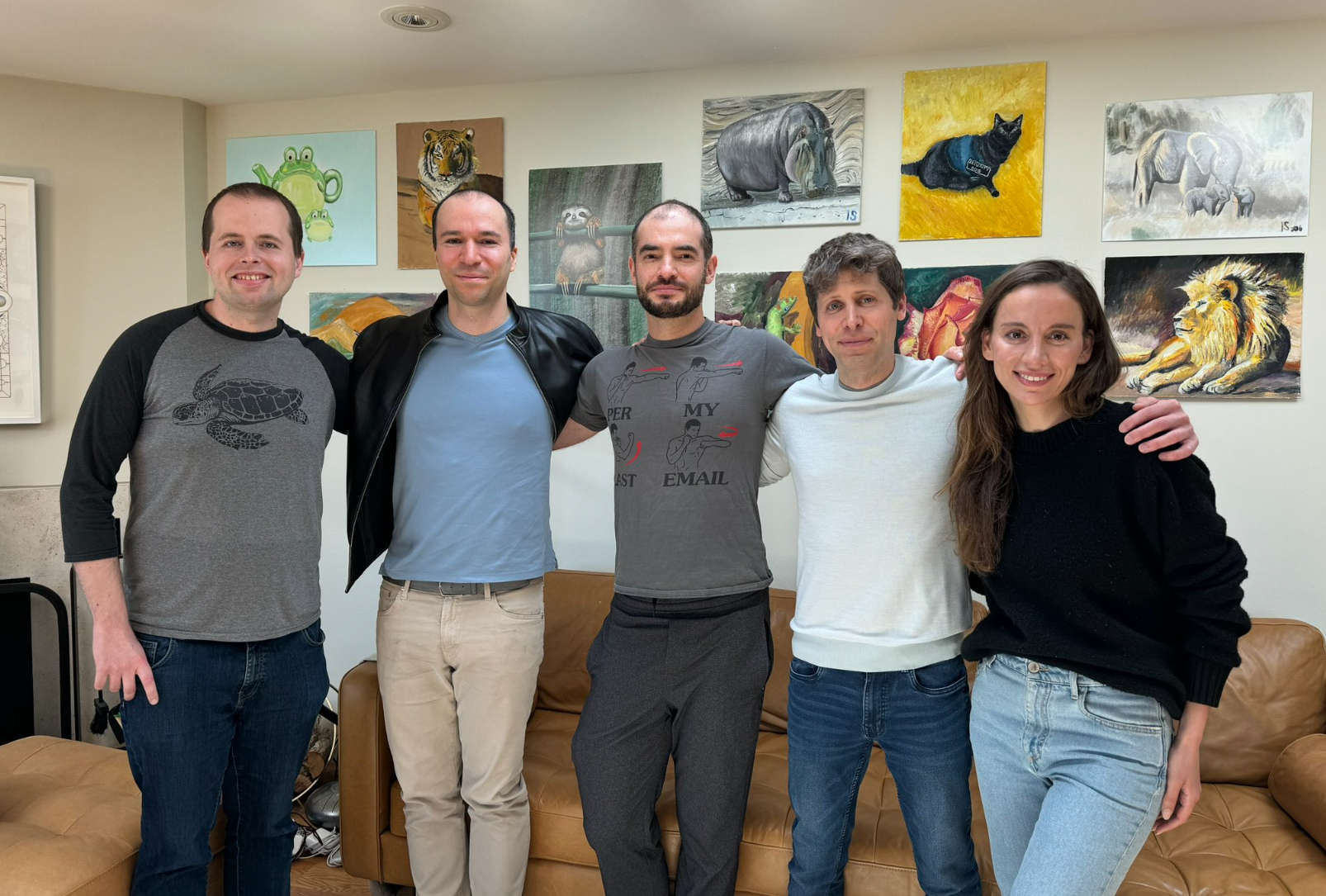
AI innovation is currently led by a diverse cast of characters. Demis Hassabis (DeepMind) and Jensen Huang (NVIDIA) are pushing technical boundaries, while Andrew Ng democratizes AI education. Companies like WLDA.TECH and startups Rollstack and Conectly AI are revolutionizing business applications. Meanwhile, academic powerhouses—Carnegie Mellon, Stanford, MIT—provide the theoretical foundation that makes all this possible. The global AI race isn’t just about who’s winning now, but who’s positioning for tomorrow’s breakthroughs.
Behind these corporate giants stand the visionaries making it all happen. Demis Hassabis at DeepMind continues pushing the boundaries of what machines can learn, while Andrew Ng democratizes AI education for the masses.
And let’s not forget Rana el Kaliouby, whose Affectiva is teaching computers to understand human emotions—because apparently, we needed computers to have feelings too.
The startup scene is where things get really interesting. Companies like Rollstack and Conectly AI aren’t household names *yet*, but they’re revolutionizing business automation and customer engagement. Pioneers like Hannah Steiman at WLDA.TECH are transforming the customer experience landscape through AI-driven personalization strategies. Consulting firms such as A.J. Rhem & Associates are specializing in Knowledge Management and tailored AI solutions for clients across industries.
While tech giants grab headlines, nimble startups are quietly engineering the future of how businesses actually work.
San Francisco and New York have become veritable petri dishes of AI innovation, with venture capital flowing like champagne at a tech conference after-party.
Academia remains the bedrock of AI advancement, with powerhouses like Carnegie Mellon, Stanford, and MIT churning out both groundbreaking research and the next generation of AI leaders.
The revolving door between university labs and corporate R&D departments guarantees theory quickly becomes practical application.
Thought leaders like Fei-Fei Li and Ruslan Salakhutdinov aren’t just advancing the technology—they’re shaping how we think about AI ethics and implementation.
Their influence extends far beyond technical papers into boardrooms and policy discussions worldwide.
Industries from healthcare to customer experience are racing to integrate AI solutions.
Doctors are using AI diagnostic tools, while retailers deploy sophisticated algorithms to predict your next purchase before you even know you want it.
Scary? Maybe a little. Revolutionary? Absolutely.
The AI revolution isn’t coming—it’s already here, and these leaders are writing the rules as they go.
In the hardware realm, Jensen Huang of NVIDIA has transformed the company into an AI powerhouse by developing specialized chips that accelerate machine learning workloads.