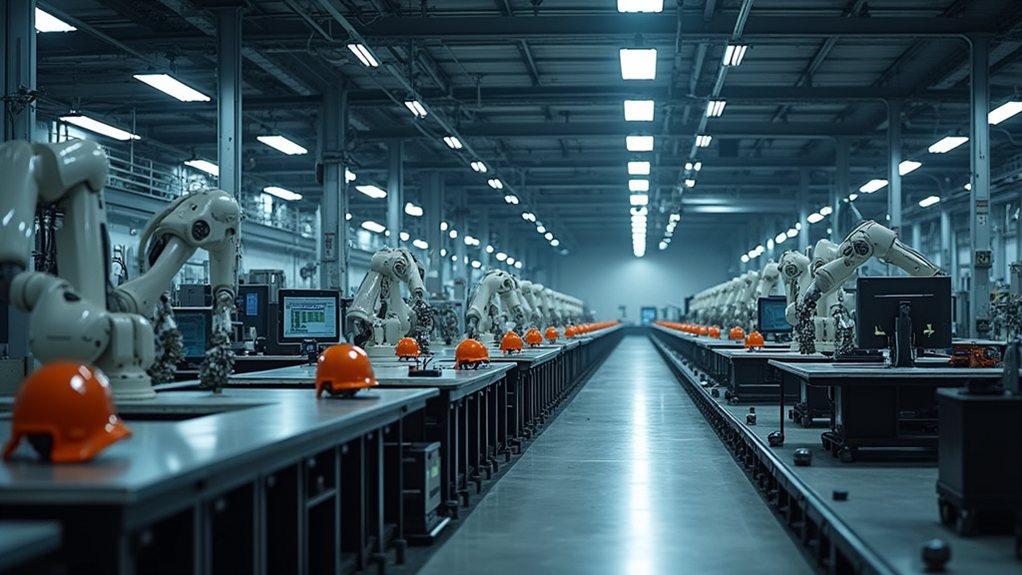
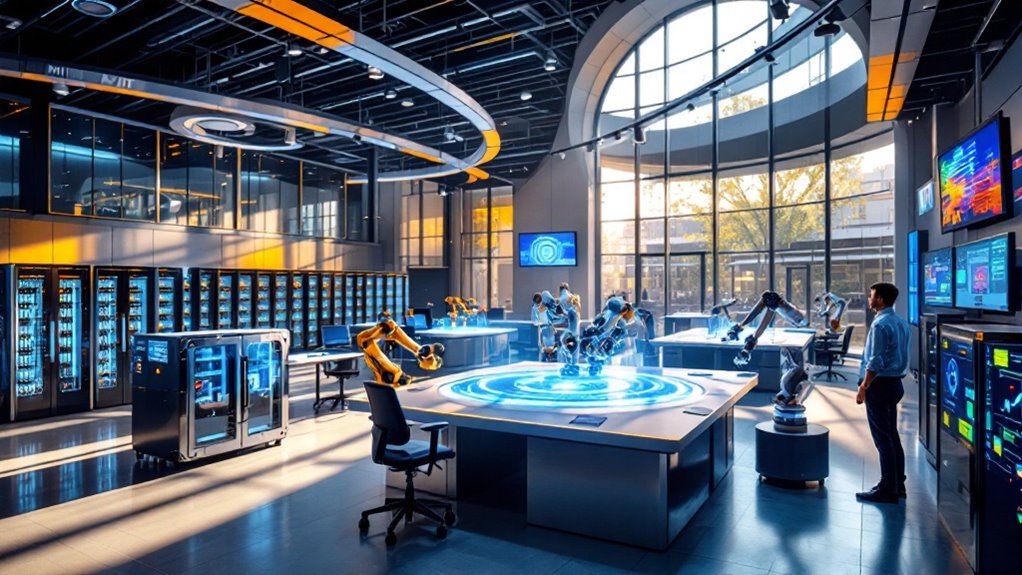
The AI landscape is dominated by tech titans like Alphabet (via DeepMind), Microsoft (partnered with OpenAI), and Nvidia (powering it all with GPUs). Startups like Perplexity and DeepL are shaking things up too—think of them as the scrappy underdogs in this high-stakes game. Companies winning the AI race aren’t just developing fancy algorithms; they’re solving real problems across industries. The AI kingdom’s power dynamics continue to shift with each technological breakthrough.
While tech giants have long jockeyed for position in various arenas, the artificial intelligence landscape has become the ultimate high-stakes poker game—with companies betting billions on who’ll shape our AI-powered future. The royal flush currently belongs to a mix of established titans and nimble upstarts, each bringing something unique to the table.
Google’s parent Alphabet continues its AI dominance through DeepMind and Gemini models, while Microsoft has cleverly partnered with OpenAI to integrate GPT technology across its product ecosystem. Think of it as the tech equivalent of a strategic marriage alliance between medieval kingdoms.
Meanwhile, Nvidia sits back counting its chips—literally—as its GPUs power virtually every significant AI advancement on the planet.
While others chase algorithms, Nvidia simply manufactures the shovel for everyone’s AI gold rush.
The startup scene is equally dynamic. Perplexity has emerged as the plucky challenger to traditional search, answering your questions before you’ve even finished asking them.
DeepL has turned translation into a $2 billion business (apparently telling computers to speak French is more lucrative than you’d think), doubling its valuation after a hefty funding round in 2024.
Looking for explosive growth? Sportradar Group AG might not be a household name, but with 795% EPS growth, they’re the MVP in AI-powered sports analytics.
Duolingo’s owl mascot is clearly hiding some serious AI smarts beneath those feathers, serving 113 million monthly users while rolling out new AI features faster than you can say “¿Dónde está la biblioteca?”
From generative AI transforming content creation to autonomous robots weeding fields at Carbon Robotics, artificial intelligence has escaped the lab and entered practically every industry imaginable. For investors seeking momentum plays, companies like Quantum Computing have delivered exceptional returns with a remarkable 622% total return over the past 12 months.
Healthcare, agriculture, beauty, and beyond—AI’s tendrils reach everywhere. These technologies are driving economic growth with projections suggesting AI could contribute up to $15.7 trillion to the global economy by 2030. Skillsoft delivers corporate learning solutions through its AI-driven Percipio platform, bridging skill gaps for organizations worldwide.
The real winners may well be those companies balancing innovation with practical application.
Because in this high-stakes game, it’s not just about building the smartest AI—it’s about building AI that actually solves problems people care about. The leaders understand this fundamental truth.