
Figure AI is privately owned, with founder Brett Adcock likely maintaining a significant stake despite multiple funding rounds diluting his ownership. The humanoid robotics company’s investors include tech heavyweights Microsoft, Nvidia, Intel, and Jeff Bezos, who’ve collectively poured around $845 million into the venture. No IPO plans exist yet, though the company’s ambitious $39.5 billion valuation target suggests the ownership landscape might shift as Figure chases its 100,000-robot dream.
When billions of dollars flow into a cutting-edge AI robotics company, the question of ownership becomes particularly intriguing. Figure AI, nestled in Sunnyvale, California, operates as a private entity outside the public market spotlight that would typically expose its ownership structure to the masses.
The man behind the humanoid robot curtain? Brett Adcock, who founded the company in 2022 after previously launching Archer Aviation and Vettery. Adcock isn’t just the founder—he’s the CEO and primary visionary steering Figure’s development of AI-powered humanoid robots.
As with most founders, he likely maintains a substantial equity stake, though each massive funding round inevitably chips away at his ownership percentage. Think of it as the founder’s dilemma: grow big or keep control? You can’t have both, even when you’re building the robots of tomorrow.
Speaking of funding rounds, Figure AI’s investor roster reads like a who’s who of tech giants. In February 2024, the company secured a whopping $675 million from Microsoft, Nvidia, Intel, and OpenAI’s investment arm, valuing the company at $2.6 billion. This investment followed their earlier May 2023 funding round where they raised $70 million led by Parkway Venture Capital.
Not impressed yet? Jeff Bezos personally threw in an extra $100 million through his Explore Investments firm. Amazon’s startup fund also got in on the action, apparently hedging bets on both the human and robot workforce.
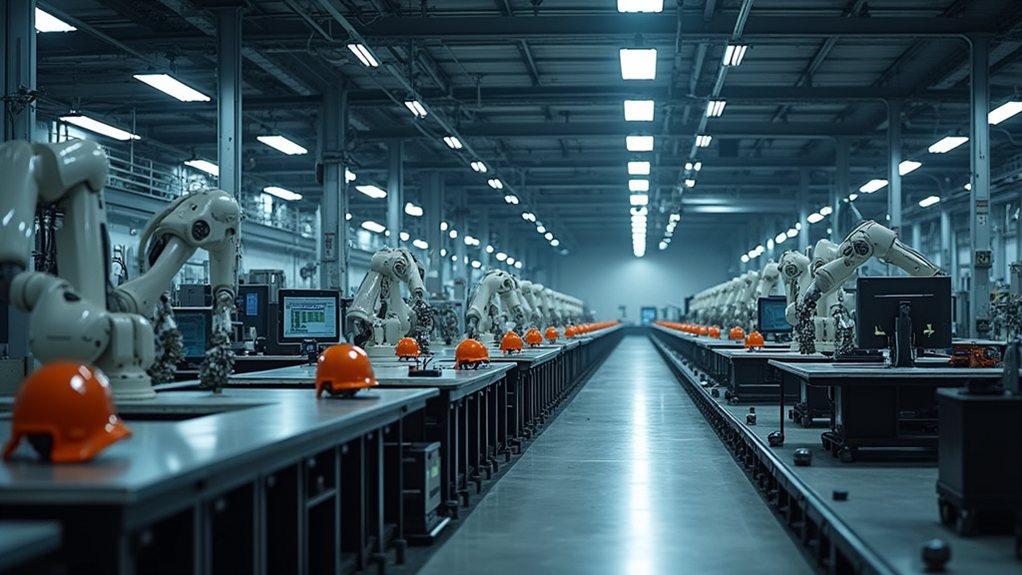
The company reportedly aimed even higher in February 2025, targeting between $1.5 and $2.5 billion in fresh capital at a staggering $39.5 billion valuation. The ambitious production goal includes manufacturing and deploying 100,000 humanoid robots targeting labor-intensive industries. That’s quite the growth curve for a three-year-old startup, even by Silicon Valley standards.
For those hoping to grab a piece of Figure AI’s potential robot revolution, bad news: no public stock exists. The company remains privately held with no announced IPO plans.
Accredited investors might occasionally snag shares on secondary platforms like Hiive, where early employees or investors sometimes cash out. But for now, Figure AI’s ownership remains firmly in private hands—human ones, ironically enough.