
AI content creation offers substantial financial benefits through cost reduction and scalability, while boosting productivity with SEO optimization and endless topic generation. However, the output often lacks human creativity and emotional intelligence, potentially damaging brand credibility with factual errors. Legal concerns about plagiarism and search engine penalties loom large. In practice, AI works best as a super-efficient assistant rather than a replacement for human writers. The devil, as they say, is in the nuanced details.
The financial math checks out too. Rather than maintaining a bullpen of writers, editors, and researchers, companies can subscribe to AI tools that don’t request health insurance or complain about the office thermostat. This scalability means producing 100 articles doesn’t cost ten times more than producing 10—a financial director’s dream come true.
AI doesn’t need health insurance or complain about the office thermostat—a financial director’s dream come true.
AI doesn’t just write fast; it writes smart (well, sometimes). These tools can analyze search trends, incorporate SEO-friendly keywords, and structure content for maximum digital visibility. Writer’s block? That’s so 2019. Today’s AI can generate endless topic ideas and outlines when human creativity runs dry. Many professionals now use tools like Jasper and Copy.ai to streamline their creative workflow and boost productivity across various content types.
But here’s where the plot twists. AI-generated content often reads like it was written by someone who learned English by reading nothing but corporate memos and Wikipedia entries. The text lacks that human spark—the clever turn of phrase, the cultural intuition, the emotional intelligence that connects writer and reader. These limitations explain why AI content typically requires human editing to ensure quality and coherence before publication.
Accuracy issues abound too. AI confidently presents falsehoods with the same authoritative tone it uses for established facts. Without careful human oversight, these digital ghostwriters can damage brand credibility faster than a viral social media fail.
The legal and ethical questions loom large as well. Search engines increasingly penalize content that appears mass-produced or lacks originality. Transparency concerns about AI authorship persist, and regulators are playing catch-up to an evolving landscape. Another major concern is the plagiarism problem associated with AI content, as it frequently produces material that closely resembles existing web content.
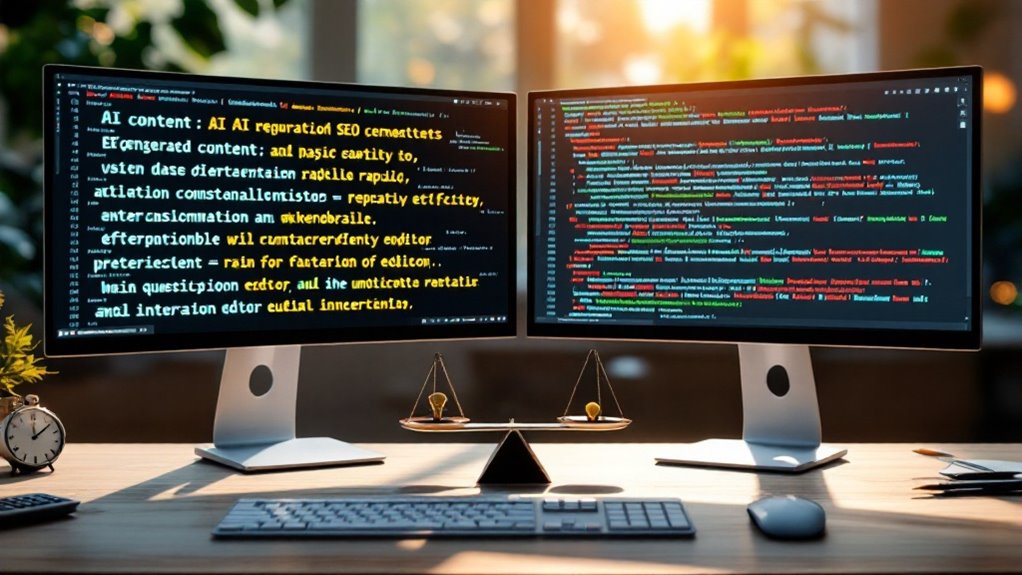
The verdict? AI makes an excellent assistant but a questionable replacement—like having a super-efficient intern who occasionally makes up facts and can’t understand sarcasm.